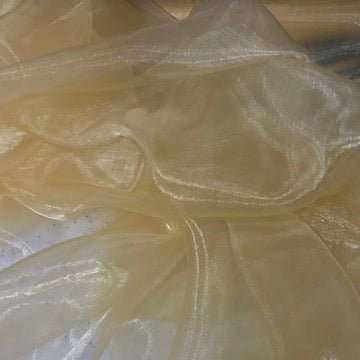
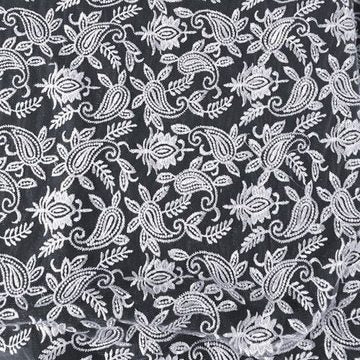
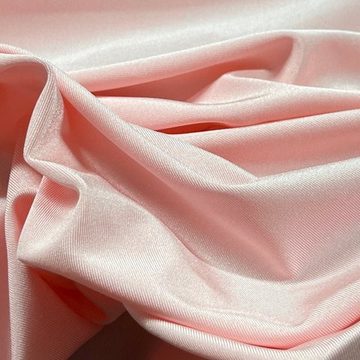
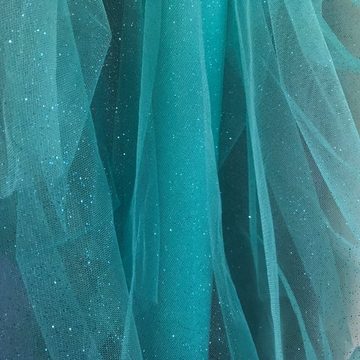
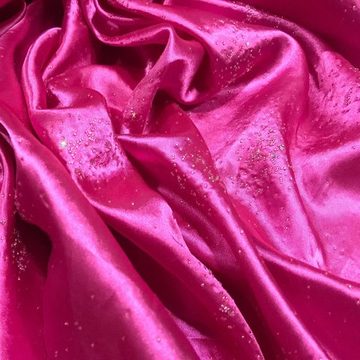




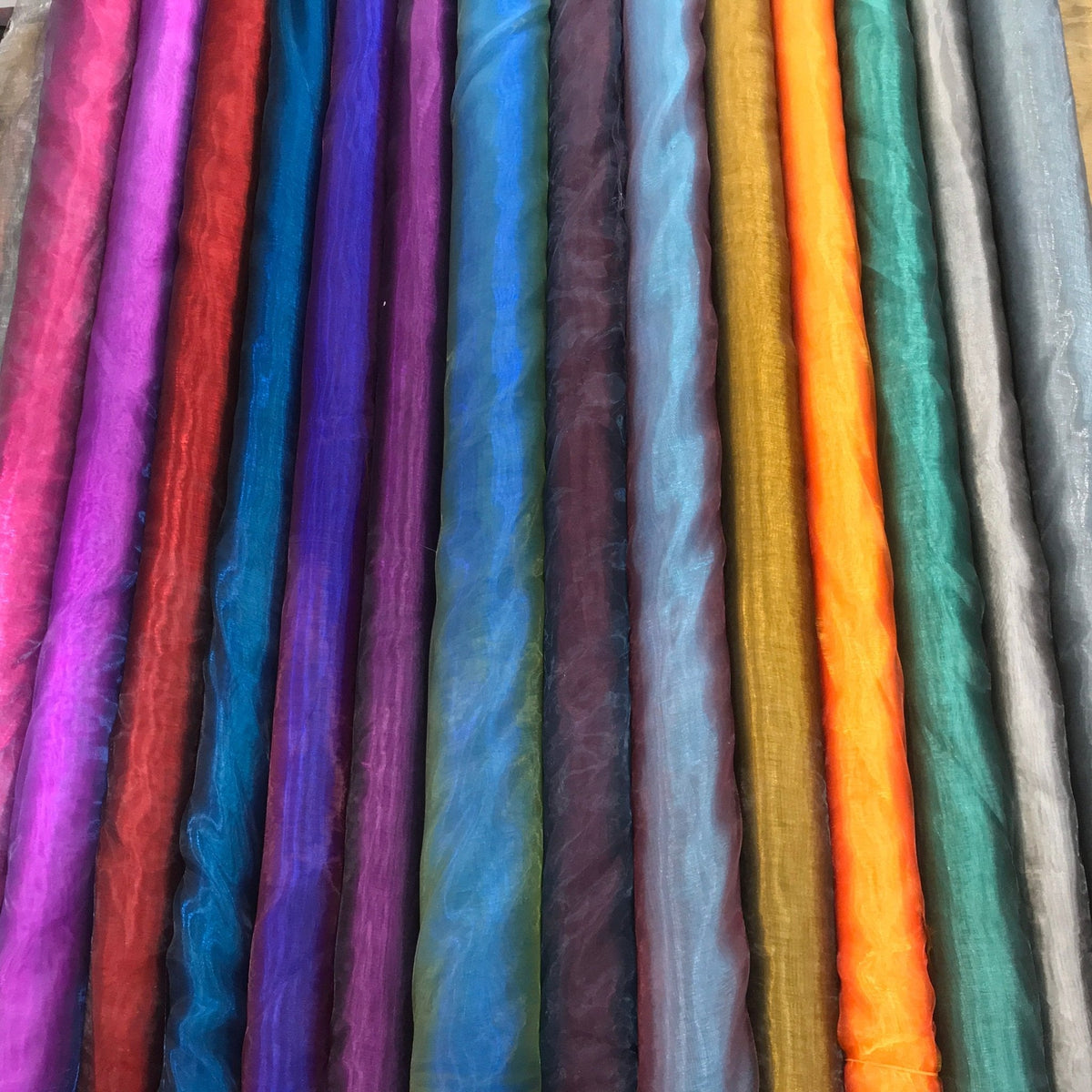
Organza is one of those fabrics that looks far trickier than it is. It's sheer, crisp and catches the light beautifully, which is why it turns up on everything from party dresses and costume overlays to window voiles, table runners and Christmas gift bags. The catch? It's slippery, it frays and every stitch shows. With a few simple tricks, though, it's very manageable, even if you're fairly new to sewing.
Here's our straightforward guide to cutting, stitching and finishing organza, plus a few of our favourite organza fabrics to practise on.
Why organza behaves the way it does
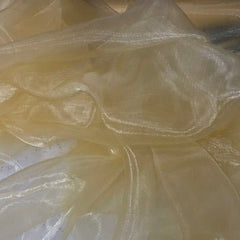
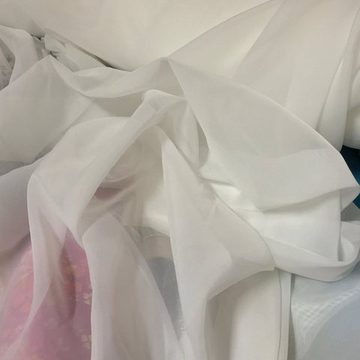
Organza is a thin, plain-weave sheer fabric with a crisp handle. That crispness is great for structure (think full sleeves, bows and floaty overlays) but the open, lightweight weave means it can shift as you cut and fray at the edges. Because it's see-through, seam allowances and stray threads also show from the right side, so a neat finish matters more than usual.
Cutting organza without the slipping
- Cut in a single layer. Folding organza double makes it creep, so lay it out flat and cut one piece at a time, flipping your pattern for the mirror piece.
- Use a sharp blade. Fresh fabric scissors or a rotary cutter and mat give the cleanest edges. Blunt scissors chew the fibres and make fraying worse.
- Stabilise it. Laying a sheet of tissue paper underneath helps stop it sliding about. Pattern weights are kinder than pins, which can leave visible holes.
- Pin inside the seam allowance. If you do pin, use fine, sharp pins and keep them within the seam allowance so any marks stay hidden.
Machine settings that make it easier
- Fine needle: a new size 60 to 70 (8 to 10) microtex or universal needle helps avoid snags and puckering.
- Slightly shorter stitch: around 2 to 2.5mm usually gives a neat, flat seam on lightweight fabric.
- Hold the threads: gently hold the top and bobbin threads as you start so the machine doesn't pull the fabric down into the needle plate.
- Test first: always run a few lines on a scrap. Organza varies, and a minute of testing saves a lot of unpicking.
If the fabric still drags, stitching through tissue paper and tearing it away afterwards works a treat.
The best seams and hems for sheer fabric
Because you can see straight through organza, French seams are the go-to. Sew the seam with wrong sides together, trim it close, then fold right sides together and stitch again to enclose the raw edge. It looks tidy from both sides and stops fraying in its tracks.
For hems, try a narrow rolled hem (by machine with a rolled hem foot, or by hand) for a delicate finish on sleeves, skirts and scarves. For crafts and décor, a narrow double-turned hem or a tight zigzag along the edge is quick and effective. If you have an overlocker, a rolled edge setting is ideal for long lengths such as table runners and drapes.
Pressing organza safely
Most organza fabrics are polyester, so keep your iron on a low, synthetic setting and always use a pressing cloth. Press rather than drag the iron, and test on a scrap before you start. Too much heat can melt or shine the surface, and any glitter, foil or embroidery details will thank you for the extra care.
Organza fabrics to try
Ready to give it a go? These are all in stock now and great value for practising your new skills:
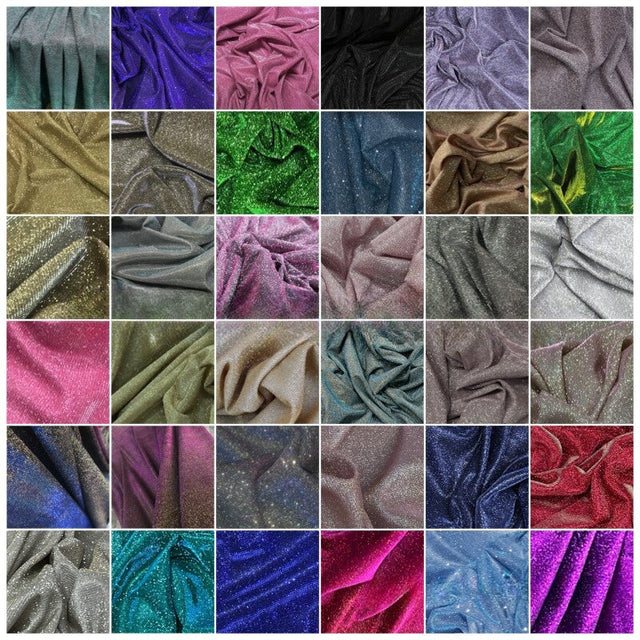
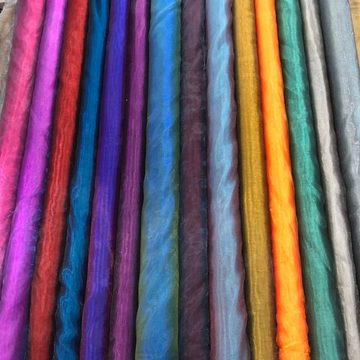
- Plain Two-Tone Organza Fabric 150cm: now £3.99 a metre (was £5.99). The shot effect shifts colour as it moves, which is gorgeous on overlays, sashes and bows. Colours in stock include Magenta Shot Blue, Purple Shot Red, Turquoise Shot Red, Old Gold Shot Black, Silver Shot Black and Cherry Shot Gold.
- Silver Foil Snowflakes Organza 150cm, Green: new in at £3.99 a metre (was £6.99). Lovely for festive table runners, gift bags and Christmas draping.
- Christmas Glitter Organza Voile 60", Xmas Tree: £3.99 a metre (was £6.99). A fun choice for Christmas décor and wrapping, with limited stock left.
- Diamonds Embroidery Organza Voile 60", Terracotta: new in at £4.99 a metre (was £6.99). A warm, embroidered sheer for draping, voiles and dress overlays.
Easy organza projects to start with
If you'd like a gentle first project, start with something with straight edges: a table runner, a set of drawstring gift or favour bags, a big hair bow or a simple window voile. Once you're happy with French seams and rolled hems, move on to sleeves, skirt overlays and costume pieces.
Fancy giving organza a try? Pick up a metre or two of any of the organzas above to practise on. At these prices, there's no harm in buying a little extra for testing. Happy sewing!